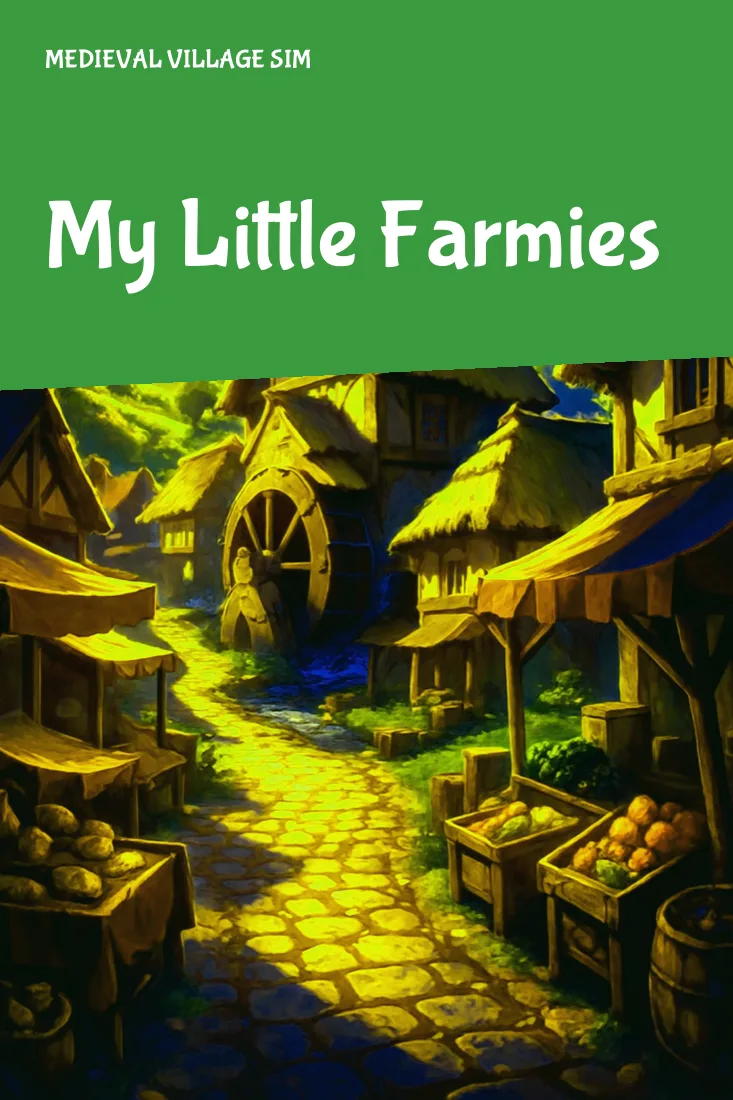
The first thing you notice is the animation. Workers trundle between buildings, chickens flap in their pens, and a Mangalitsa pig rolls about in its enclosure as if it had nowhere else to be. My Little Farmies looks like a picture book someone has quietly set in motion, and it would be easy to assume the charm is the point. It is not. The charm is the wrapping on one of the most satisfying production economies a browser has ever hosted.
Upjers, the Bamberg studio behind it, describes the goal as setting up a lucrative production chain, and that phrase is the whole design in miniature. Fields grow wheat, the mill turns wheat into flour, the bakery turns flour into bread, and somebody in the village wants that bread. Every new building hooks into a web of earlier ones, so each decision echoes for days. We played it for over two months and never ran out of things to rethink.
How a loaf of bread teaches you the whole game
Early on, the game hands you a field, a mill and a bakery, and the lesson is simple: keep all three busy. Soon you realize the mill is faster than the field and the bakery slower than the mill, and suddenly you are juggling ratios. Do you plant more wheat, or build a second bakery? The game never tells you. It just shows you which building sits idle, and that idle building becomes a small itch you want to scratch before bed.
That loop scales beautifully. The carpenter workshop, the dairy and the winery each add their own chains, and many finished goods feed into other recipes rather than going straight to market. By the second week we kept a scrap of paper beside the keyboard with arrows between buildings. Few farm games make paper feel necessary. This one does, and in the best way, because the arrows keep changing as the village grows and new options unlock with each level.
Merchants, wholesalers and the Hanseatic League
Making goods is half the job; deciding where they go is the other. You can sell to wholesalers or wait for travelling salesmen, and their appetites differ. That small choice adds a layer of timing to the chains, because a full warehouse is only useful if the right buyer turns up. We learned to hold back certain wares rather than dumping them the moment they appeared, which is exactly the kind of judgment call a good economy game should ask for.
The Hanseatic League system, together with the marketplace, brings other players into that economy. Guilds trade and cooperate, and a well-run guild can smooth over your village’s weak spots by supplying what you are short of. We joined a mid-sized guild in our third week and found it friendly, organized and full of players who had been at this for years. They answered questions quickly and never made us feel slow for asking.
Regions that change what grows and what you need
Just when the home village starts to feel solved, the game opens new regions. Upjers names the North Sea, the Dark Forest and the Volcano Region among them, and each brings its own plants and therefore its own small economy to master. The effect is like moving to a second farm without abandoning the first: your old chains keep running while you learn new ones, and goods start flowing between places in ways you have to plan.
These regions are why we rate the staying power so highly. Plenty of farm games run out of ideas after the first big unlock. Here the map keeps widening, and each widening forces you to reconsider decisions you thought were finished. On a quiet Thursday evening in late October, with snow already forecast for the Prairies, we spent a contented hour redesigning an entire region’s layout. It did not feel like a chore once.
Tower contests, the Tithe Tournament and the decorating itch
Community events give the calendar a shape. Tower Building asks players to contribute goods toward a shared structure, and the Tithe Tournament turns production into a friendly competition. Neither requires you to change how you play; both reward a village that already runs smoothly. We liked that they feel like celebrations of good planning rather than detours away from it, and our guild’s chat came alive whenever one started.
Then there is the decorating. Upjers counts more than two thousand decorations, plus special buildings and Wonders of the World to place in your settlement. You can ignore them for weeks if efficiency is your thing, but most of us eventually began laying paths, planting hedges and arranging the market square for no reason other than pleasure. The village becomes yours in a way a spreadsheet never quite could, and that matters over months.
Your opening week in My Little Farmies
- Keep the mill and bakery running without gaps; an idle building is the clearest sign of where to invest next.
- Plant more wheat than you think you need, because flour shortages stall bread and everything waiting on bread.
- Sell your first surplus to wholesalers, then watch which travelling salesmen appear and what they ask for.
- Hold off on heavy decorating until the dairy is built; early coins work harder inside production buildings.
- Look for a friendly guild by the end of the week, even if you only lurk in its chat at first.
What wears thin
- The menus grow crowded once several regions and dozens of buildings are active
- Newcomers may feel lost when chains branch faster than the tutorial explains them
- Some event goals favour long-established villages with very deep warehouses
What keeps us coming back
- Production chains that keep rewarding fresh thinking, weeks after the tutorial has ended
- Lovely animation that makes a busy village genuinely pleasant to watch
- New regions that reopen the planning puzzle instead of padding the same one
- A village with no combat, growing purely through good management and trade
Who will settle happily into My Little Farmies
Anyone who enjoys puzzles of supply and demand, keeps notes about which building feeds which, and likes their games peaceful. It also suits decorators who want a medieval village worth looking at. If you crave constant action, the slow, steady rhythm may frustrate you.
Where we land on My Little Farmies
My Little Farmies does what the best management games do: it makes a simple idea grow into a web of decisions that never quite resolves. Bread, wine and cheese become puzzles, regions refresh the map, and the guild layer adds company without demanding it. It is gentle on the eye and sharp underneath. Of the six games we reviewed, it is the one we would hand to a friend first, without hesitation.